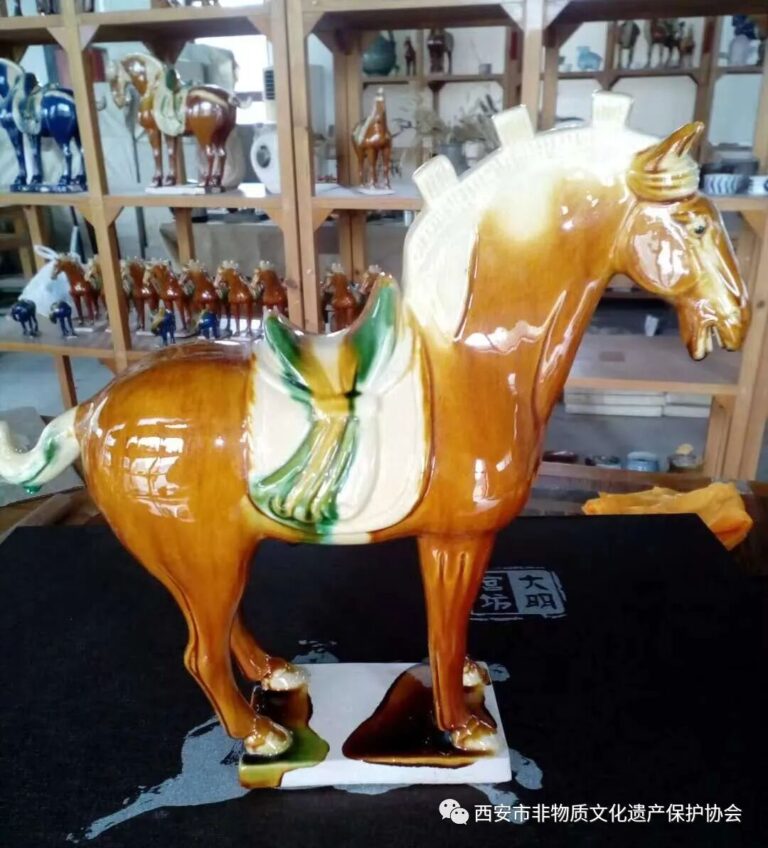
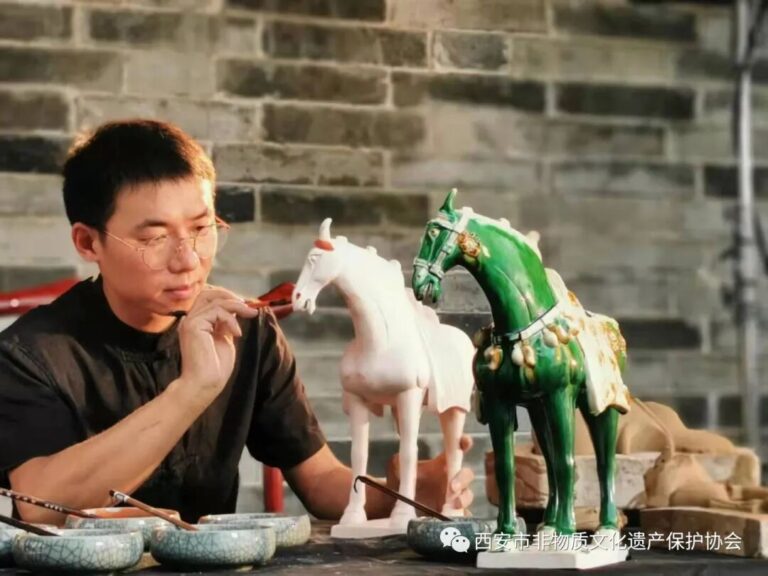
The Tang Dynasty was one of the longest-lasting and most powerful dynasties in Chinese history, marking the golden age of Chinese feudal society. The Tang Dynasty was economically prosperous and culturally vibrant, with Tang Dynasty painted pottery (Tang Sancai) being a prime example of this period. It is renowned for its vivid and lifelike shapes, bright colors, and rich depiction of daily life.
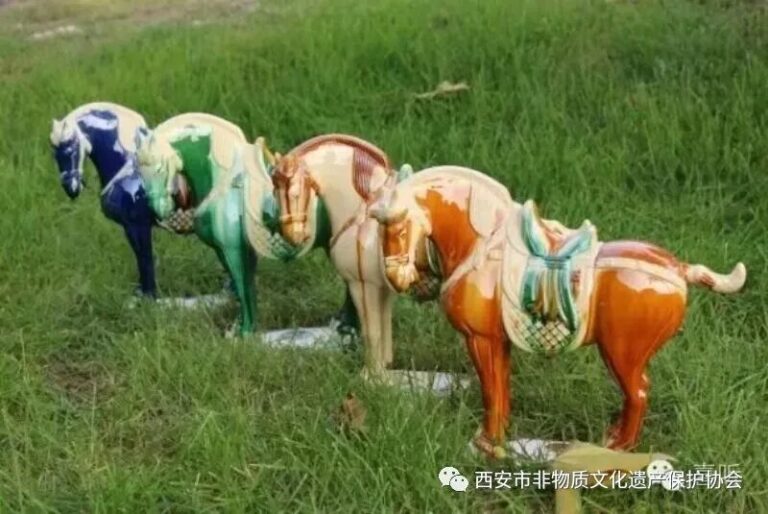
Tang Dynasty painted pottery is a precious example of ancient ceramic firing techniques, belonging to a type of glazed pottery that flourished during the Tang Dynasty. Its production has a history of over 1300 years, drawing on characteristics of Chinese painting, sculpture, and other arts and crafts. It primarily involves applying colored glazes to the clay body, mainly using yellow, white, and green. During the firing process, the metallic minerals undergo chemical changes, causing the glazes to flow and blend, creating a mottled, vibrant, and naturally harmonious effect. It is a traditional art form with a unique Chinese style. The interplay of colors in Tang Dynasty painted pottery reveals a magnificent and opulent artistic charm.
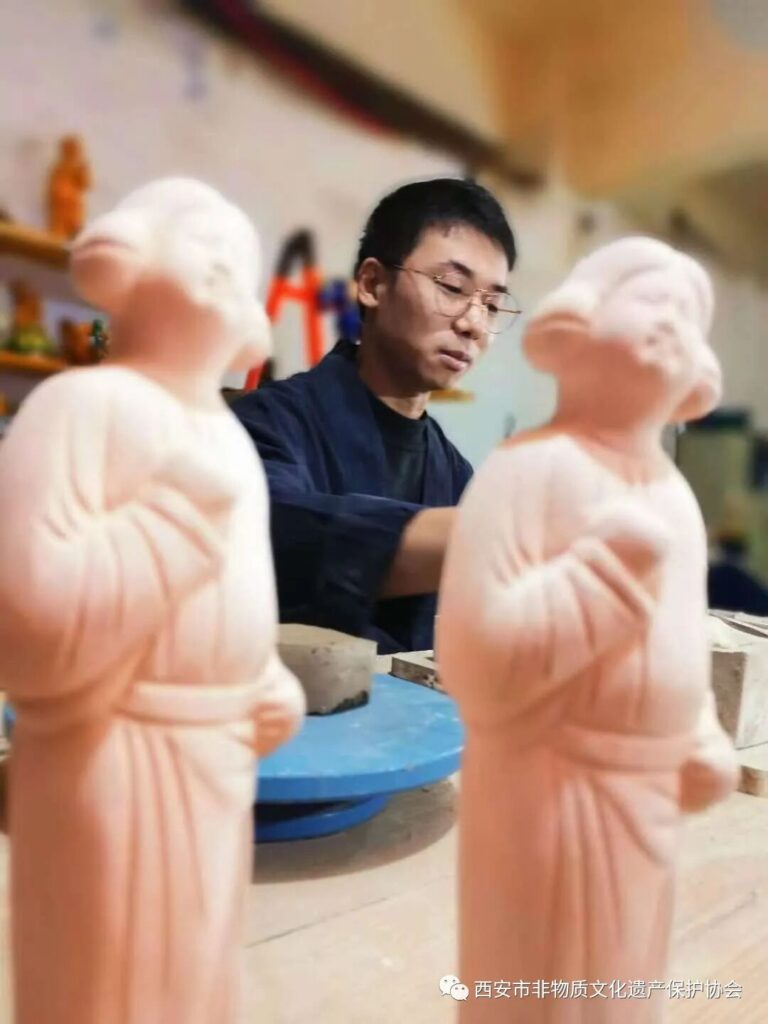
The main component of Tang Sancai glaze is lead silicate glass. The tricolor coloring utilizes the fluidity of a lead-containing flux during firing, allowing the coloring agents containing metal oxides to flow, blend, and permeate within the flux, naturally forming various hues such as yellow, emerald green, dark green, sky blue, brownish-red, and eggplant purple. This results in a dazzling and vibrant glaze surface. The term “tricolor” is a general term; based on the number of glazes applied, wares can be categorized into single-color, two-color, and multi-color wares. The main glaze colors of Tang Sancai include yellow, green, white, blue, ochre, and brown, with yellow, green, and white being the most common.